

Myofunctional Disorders
When the tongue, lips and breathing don't work together as they should, the effects reach from your teeth to your sleep. Here is what normal function looks like, and the signs of a myofunctional disorder.

Normal function of the orofacial complex looks like:
- Tongue on the roof of the mouth
- Lips closed together
- Breathing through the nose
- Correct chewing and swallowing pattern
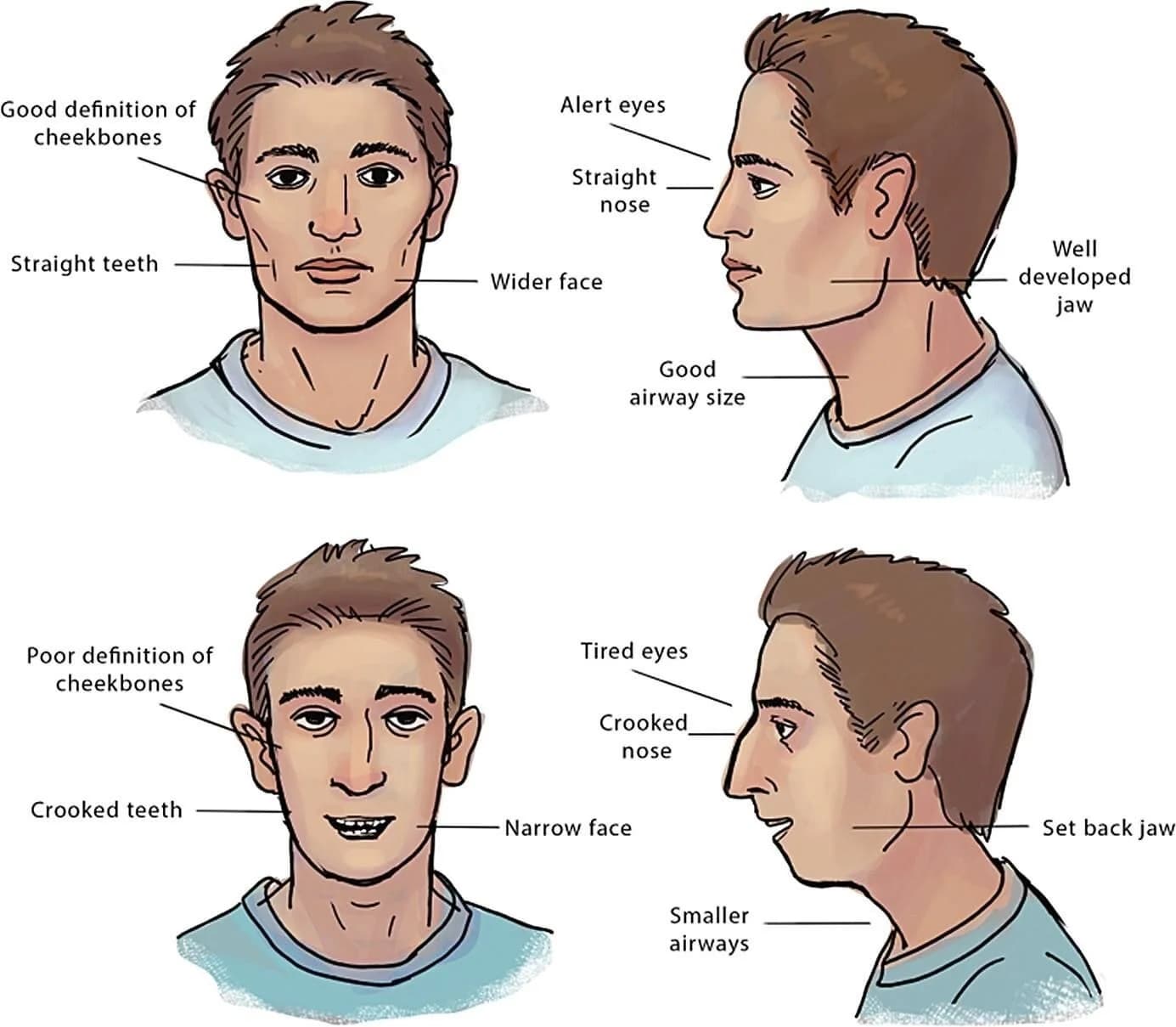
Any deviation of these normal functions is refered to as an oral myofunctional disorder. Myofunctional disorders can start before birth and can impact impact your life more and more as you age. The earlier the intervention, the more effective the treatment.
Symptoms of myofunctional disorders include:
- Forward head posture
- Open mouth posture
- Malocclusion
- Dental crowding
- Gum recession
- Missing teeth
- Persistent gingivitis
- Periodontitis
- Tooth decay
- Tooth mobility
- High narrow palate
- Small maxilla
- Low tongue posture
- Facial asymmetry
- Deviated septum
- Cheek biting
- Hypersensitive tissue
- Ticklish palate
- Long uvula
- Tight facial muscles
- Scalloped tongue
- Dental attrition
- Tooth erosion
- Temporal Mandibular Joint Disorder (TMJ/TMD)
- Strong gag response
- Gagging
- Coughing
- Difficulty swallowing
- sleep apnea
- Quivering facial muscles
- Snoring
- Daytime fatigue
- Headaches
- Tension headaches
- Migraines
- Stress
- Anxiety
- Orthodontic relapse
- Open bite
Many of these conditions can have a number of underlying factors and causes, however many of the root causes of the symptoms are found in a myofunctional disorder. Sometimes therapy can correct these problems at their root. More often, treating the underlying myofunctional disorders helps prevent further damage to body systems and improves symptom management.