

Snoring and Sleep Apnea
People tend to think that snoring is normal and while it is common, it's not harmless. It could be a warning sign of a more serious sleep condition, sleep apnea, with serious health consequences.
What is Obstructive Sleep Apnea?
Your tongue is attached to your jaw bone mostly in the front of your mouth. When the muscles in your throat, soft palate, and tongue do not work properly, your tongue drops to the back of your throat while you sleep. If the tongue causes a partial blockage, the vibrations of the tongue tissue cause a snoring sound. If the tongue blocks your airway completely, you cannot breath and your body reflexes cause you to grind your teeth, partially wake up, move, kick, and gasp for air.
Obstructive sleep apnea (OSA) is a sleep-related breathing disorder in which the upper airway repeatedly becomes narrowed or blocked during sleep, causing breathing to partially or completely stop for short periods.
Who is Affected?
Anyone of any age can have sleep apnea. Traditionally, we have thought of overweight men to be at higher risk, but we now know that young children, women, teens, and even physically fit people can have sleep apnea.
Treatment options for Obstructive Sleep Apnea
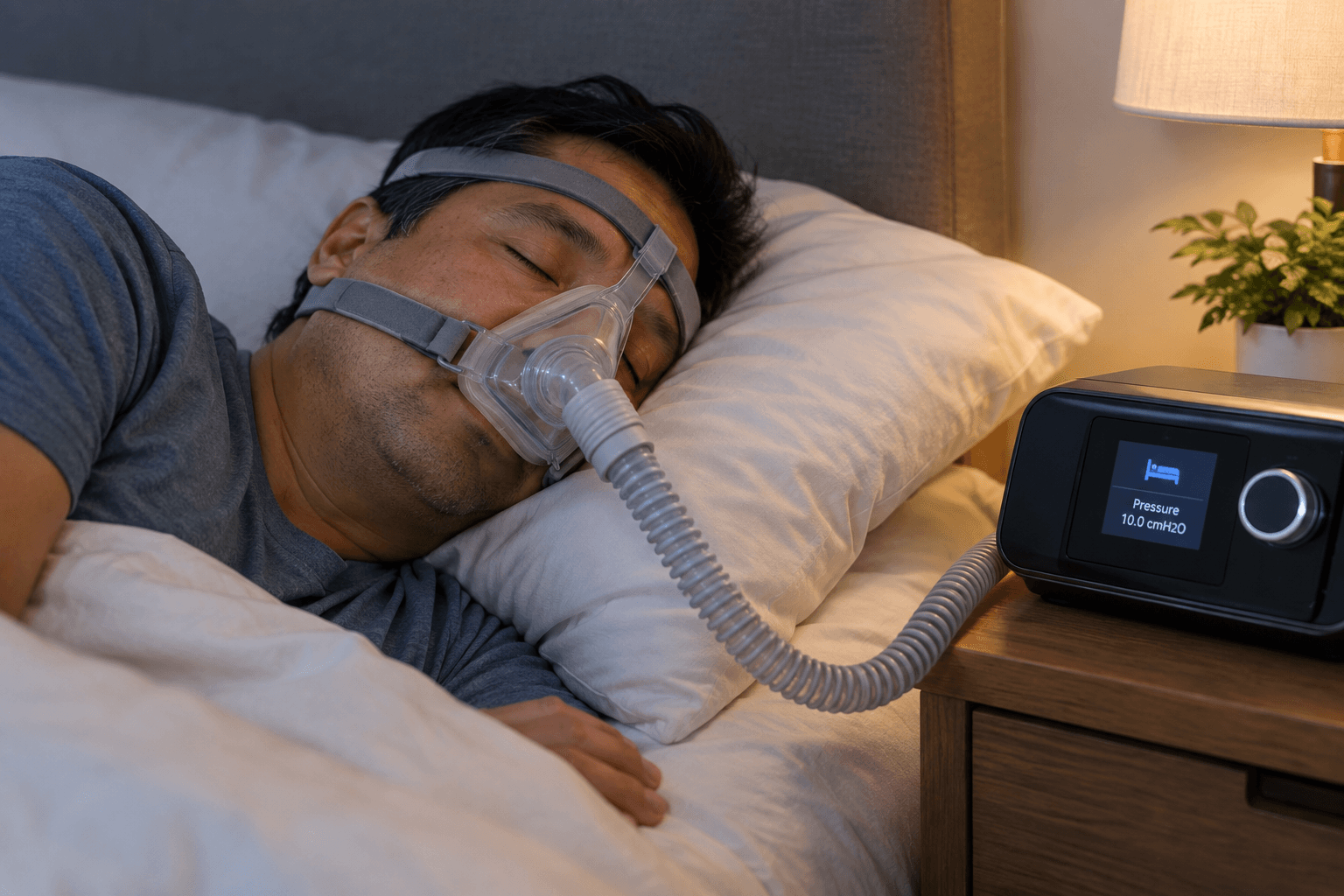
C-PAP/A-PAP: is a medical device prescribed by a physician that hooks up to your nose and mouth and blows air. The air pressure pushes the tongue and other tissues out of your airway so that you can breath. This is a very common treatment for OSA, however, many people find they cannot tolerate the machine and the side effects from use.
Oral Sleep Appliance: is a dental device that hooks onto your upper and lower teeth while you sleep. The device is specially fitted to you so that it comfortably prevents the lower jaw from slipping back. The tongue is attached to the jaw and when the jaw is positioned forward, snoring and apnea are prevented. This is a more comfortable treatment for sleep apnea.
Surgeries: in some cases, surgeries are used to treat obstructive sleep apnea. Many of these surgeries help correct the structural problems that lead to the sleep disordered breathing problems in the first place.
Hypoglossal nerve stimulation
An implanted device detects breathing and stimulates the hypoglossal nerve, helping keep the airway open by activating muscles that control the tongue.
What happens if I don’t treat my OSA?
Sleep apnea has been shown to increase risk and severity of heart disease, high blood pressure, heart attacks, cardiac arrhythmias, sexual dysfunction, diabetes, stroke, and other chronic health issues. Sleep apnea results in preventing your body from reaching REM sleep which leads to daytime sleepiness, fatigue, short-term memory loss, anxiety, depression, early onset dementia, and other chronic illnesses. These physical effects double the risk of car accidents, increase risk of airplane crashes, and other sleep deprived accidents.
How can Myofunctional Therapy help?
The main purpose of myofunctional therapy is to build and improve the tone of the muscles of the tongue and the airway to help make the muscles of the mouth and face work in harmony the way nature intends them to work. While therapy cannot cure apnea alone, current literature demonstrates that myofunctional therapy decreases apnea-hypopnea index by approximately 50% in adults and 62% in children. Myofunctional therapy could serve as an adjunct to other obstructive sleep apnea treatments. Studies and our own experiences have shown that some people achieve a complete resolution of OSA, while most patients report an improvement in their restful sleep. Although, as is with all therapy, it is important to note that some individuals may not experience any improvement at all.
If you already have moderate to severe sleep apnea, the most effective use of myofunctional therapy is in conjunction with a medically prescribed C-PAP or mandibular advancement dental appliance or as part of treatment plan from an orthodontist or oral maxillofacial surgeon that includes expansion of the roof of the mouth and airway. Many of my patients have found that using myofunctional therapy helps them to adjust to having a C-PAP mask on their face or a dental appliance in their mouth. When physicians or dentists recommend surgeries to correct structural problems resulting in sleep apnea, myofunctional therapy before and after surgery helps patients realize the greatest benefits from their surgeries.