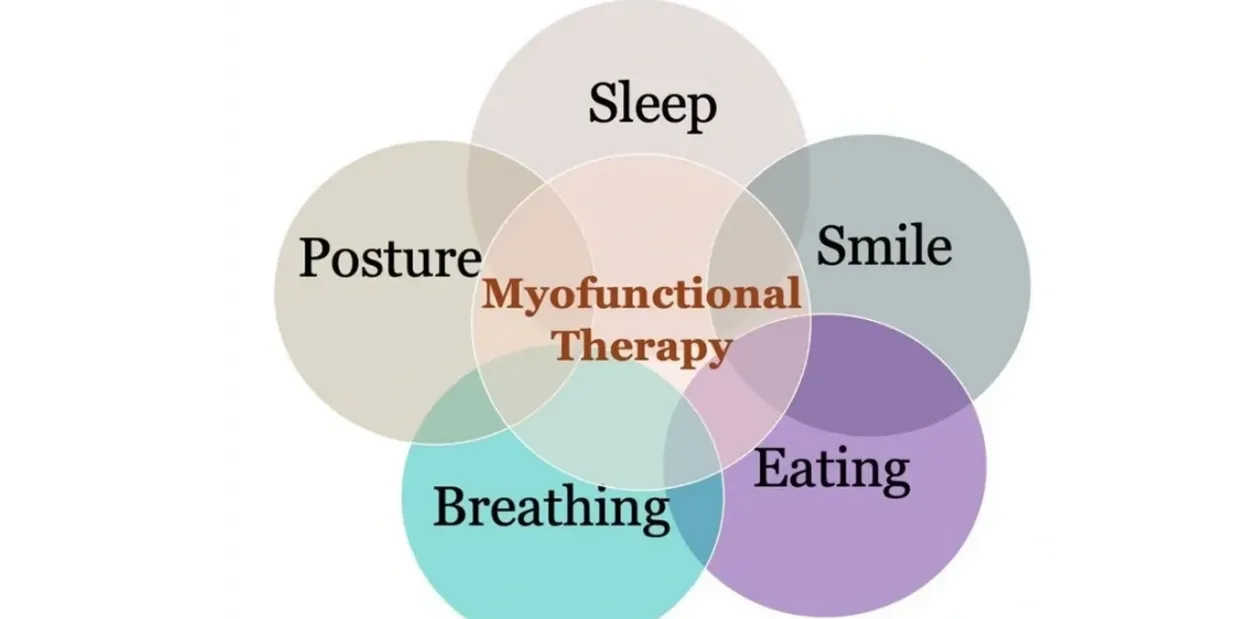
The Importance of Nasal Breathing
Nasal breathing can profoundly effect your overall health.

The many benefits to breathing through your nose include:
Air is filtered to remove: dust, dirt, pollen, dander, and other allergens.
Nitric oxide is produced in the nose, where it kills bacteria and viruses, increases blood flow, and allows for better oxygen absorption in the lungs.
Moisture is added to the air before it reaches the lungs.
Temperature and speed of inhaled air is adjusted to make it easier for the lungs to utilize it.
Improves lung volume.
Allows for diaphragmatic breathing.
Activates parasympathetic (calming) nervous system.
Decreases anxiety.
Makes you less likely to cough.
Improves athletic performance.
Facial Growth and Development
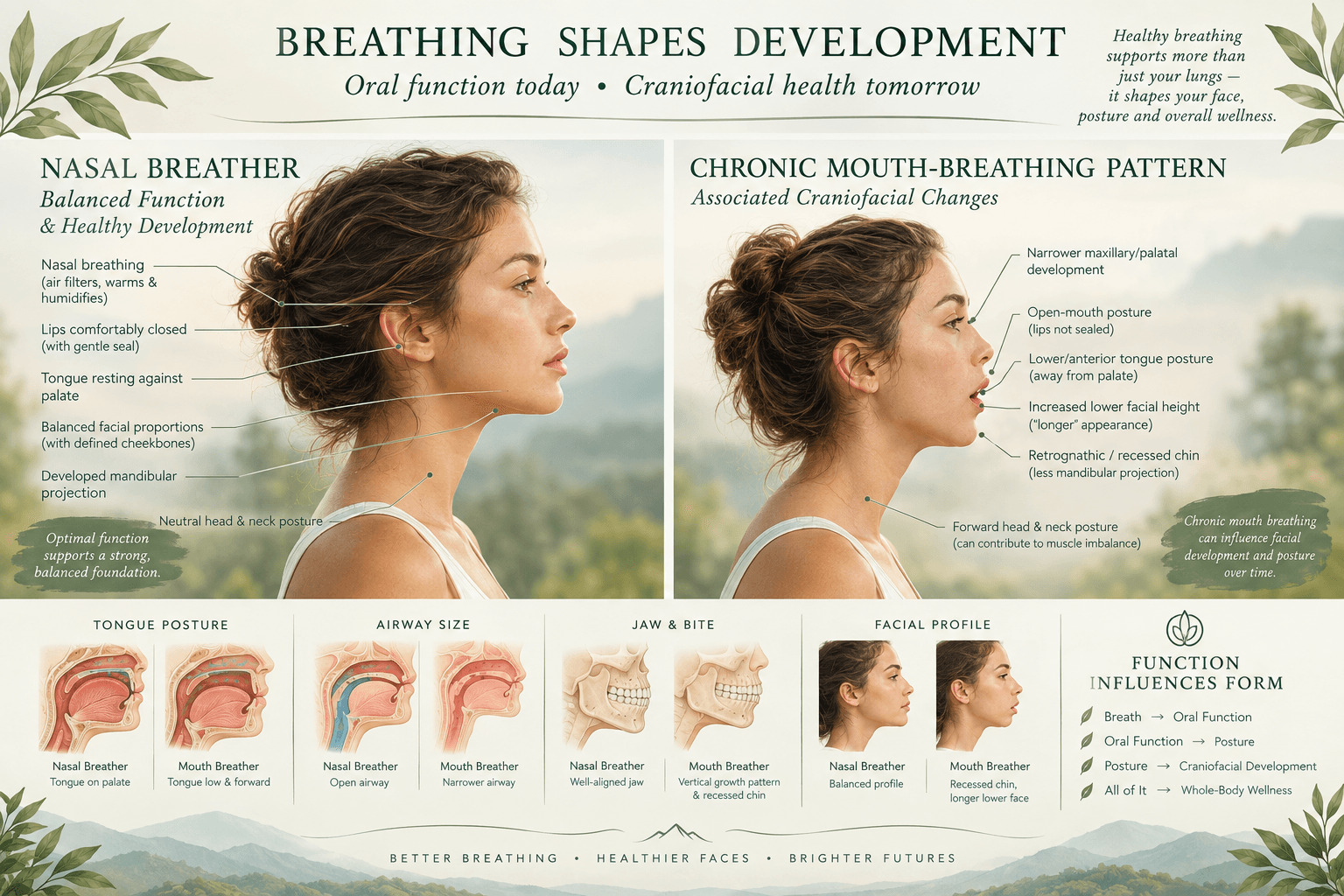
Breathing through your mouth can change the shape of your face and alter your appearance. This is especially true for children because they are still growing.
Children whose mouth breathing goes untreated may suffer from abnormal facial, dental, and neurological development. Symptoms include long, narrow faces and mouths, less defined cheekbones, small lower jaws, and “weak” chins. Other facial symptoms include gummy smiles, crooked teeth, and smaller airways. Mouth breathing in children will often lead to a lifetime of sleep disordered breathing, snoring, and sleep apnea.
What Can I Do To Make Sure I'm Breathing Properly?
Nasal breathing may seem easy enough. Just close your mouth, right? Unfortunately, for people who struggle with mouth breathing, it is not that easy. This is because habits can be difficult to change. All of the muscles—the tongue, lips, cheeks, etc—have learned to function in an “incorrect” way. The body does not actually know how to breathe normally, through the nose, and the nasal passages do not work efficiently in most cases either. In order to stop mouth breathing, the muscles must be “re-trained” to function in new ways. If the muscles are not re-trained, problems with general health, speech, orthodontic treatment, dental health, sleep, swallowing, and breathing may persist throughout life.
How long does it take?
Desiree is skilled at helping children and adults gain control over muscle patterning habits, including those involved in mouth breathing. Desiree has specialized training from the MyoMentor Institute, to guide you on your journey to find health through nasal breathing. She will evaluate your facial and tongue muscles to develop a treatment plan specific to your needs. Typically you can plan on 12-14 therapy sessions with a few minutes of practice exercises each day. You can set up a consultation and evaluation to determine the severity of your symptoms and recommended treatment.