

Tongue Tied?
How your tongue is attached to the floor of the mouth plays a significant role in how your face grows and how your mouth functions through breathing, speech, and swallowing.

Current Definition
The IAAP (International Affiliation of Tongue-Tie Professionals) defines “tongue-tie” as an embryological remnant of tissue in the midline between the undersurface of the tongue and the floor of the mouth that restricts normal tongue movement.
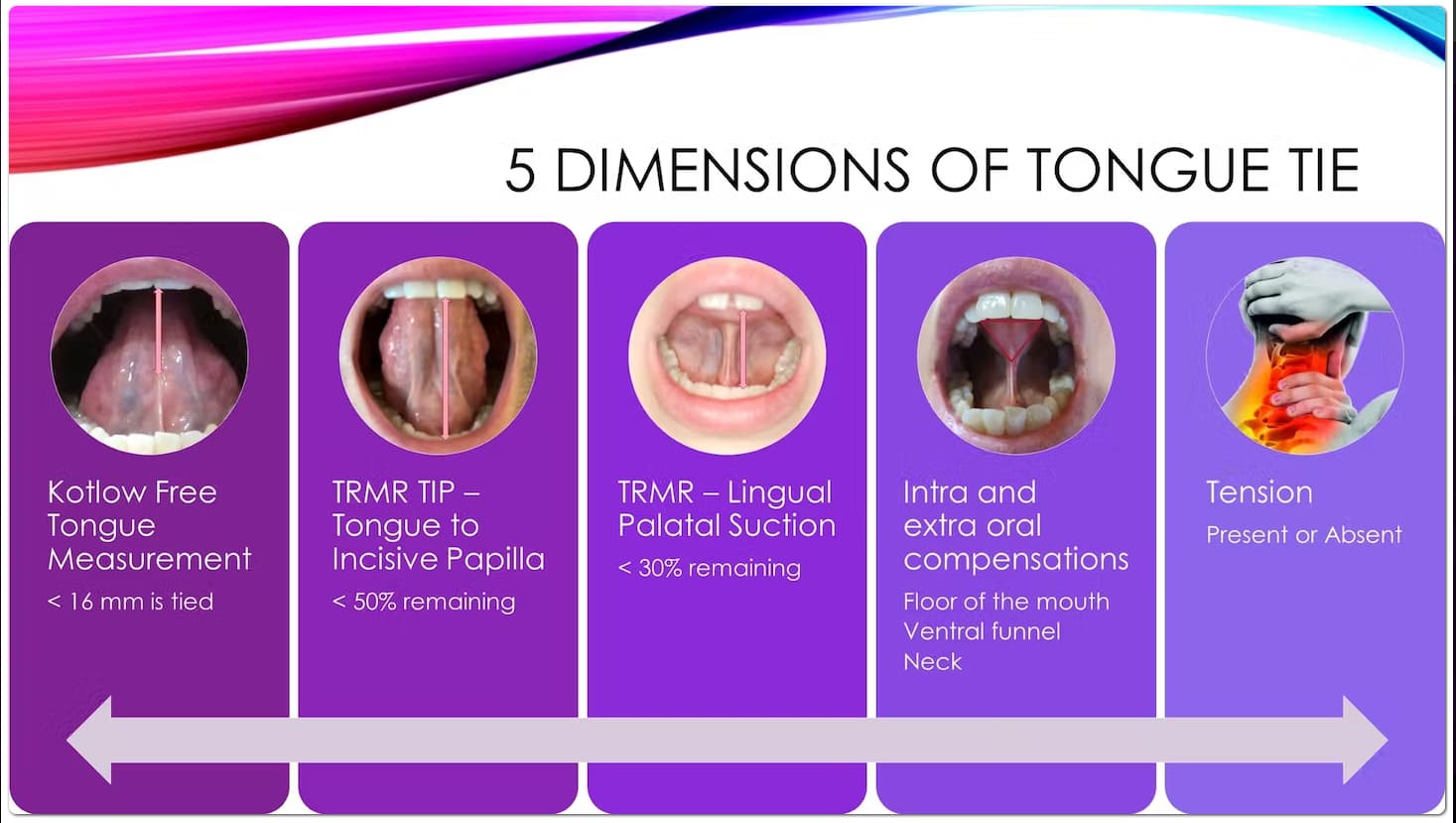
We currently describe ‘tongue tie’ or ‘tongue restriction’ in 5 dimensions:
- How far you can stick out the tongue
- How far you lift the tongue up to the incisive papilla, ”the spot” (just behind the upper back teeth with mouth open)
- How far you can open your mouth while your tongue is fully suctioned to the roof of your mouth
- How much the floor of the mouth, neck, and other muscles help you to suction your tongue or lift your tongue to the spot
- Muscle tension caused by the first three
How we assess your tongue
The tongue tie release is typically done mid-therapy after you have developed muscle tone and coordination with the muscles around the frenulum. Once the release is completed, we will work together to develop the tone, coordination, and function of the newly released tongue and work towards optimal oral muscle function.
When you meet with your myofunctional therapist, Desiree DuPuis, she will take several measurements of your tongue’s range of motion and discuss any restrictions you may have. If a tongue tie release is recommended, she will refer you to a highly qualified surgeon who has taken additional training in tongue tie assessment and treatment to release the tissues that are holding you back from normal function.
Additional Reading
For additional information, I recommend you check out the website of one of the world leaders in tongue tie research, Dr. Zaghi at https://www.zaghimd.com/tongue-tie.